Why Walnut Creek Junk Removal Costs More Than the National Average
National junk removal cost guides usually quote $150 to $600 for a typical job. Those numbers are real, and they are also not what anyone in Contra Costa County actually pays. Two local factors move the East Bay price above the national band.
The first is disposal cost per ton. A Bay Area hauler pays materially more at the scale than a hauler in most of the country. Contra Costa Transfer Station in Martinez — roughly 14 miles from downtown Walnut Creek — runs about $126 per ton, and a full truckload of mixed household debris is not light. That tipping fee is a hard cost that exists before any labor is priced.
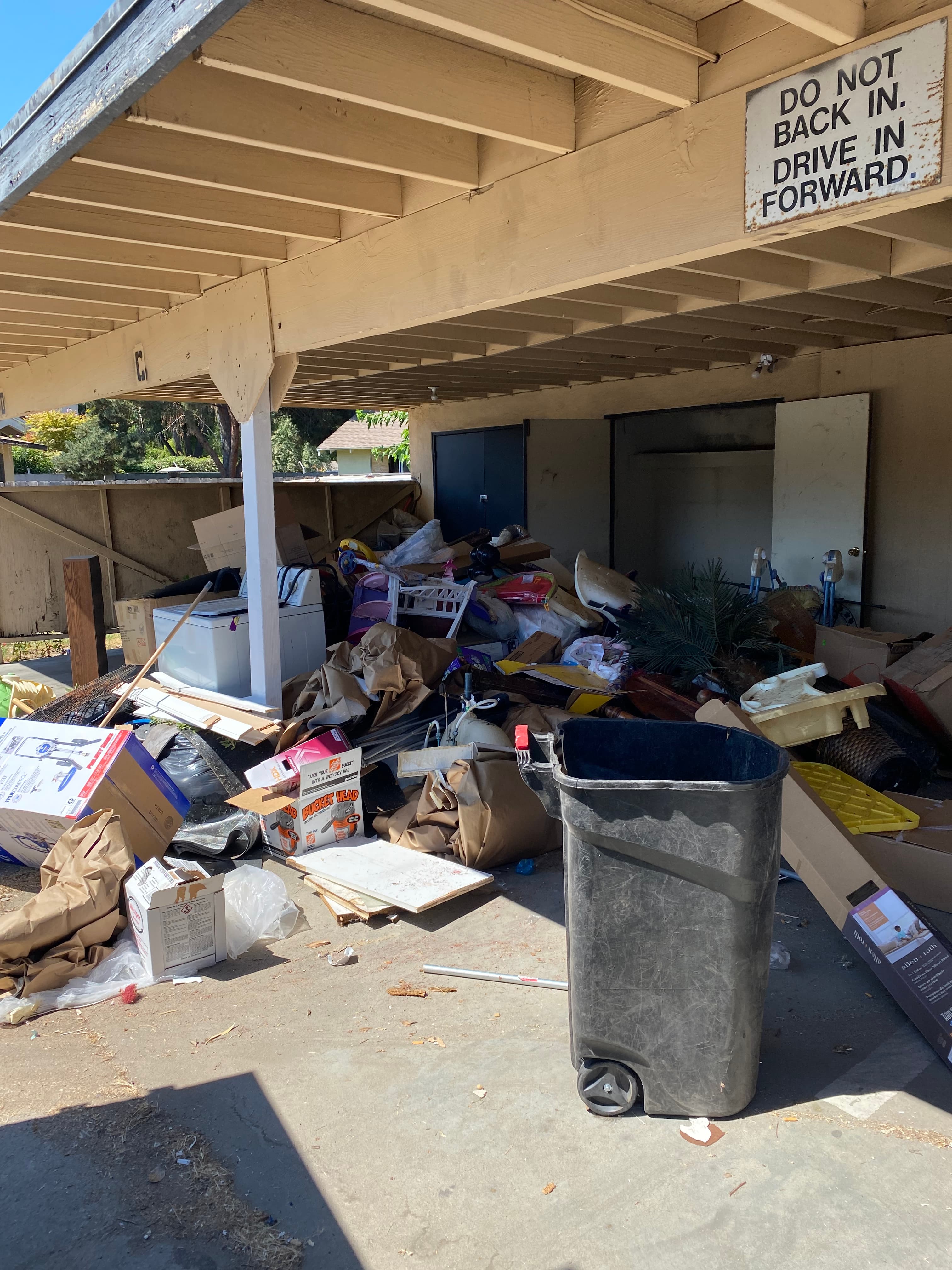
The second is labor and access. Walnut Creek housing stock skews toward older single-family homes with detached garages, plus a growing number of downtown condo and apartment buildings with elevator-only access and strict move-out windows. A cleanout that takes two people ninety minutes in a suburban tract home takes four hours in a fourth-floor unit off North Main.
A quote that ignores those two variables is not a lower price. It is an estimate that changes on the day.
What a Flat Rate Actually Includes
Flat rate means the number quoted is the number paid. For Servant King that price covers labor for the full crew, all loading and carrying, disposal and tipping fees at the transfer station, sorting for donation and recycling, and a broom-swept cleanup of the space when the load is out.
What is never charged separately: fuel surcharges, stair fees, long-carry fees, weekend fees, or an adjustment because the job ran long. The estimate is free and carries no obligation, on-site or by photo.
What is genuinely out of scope: hazardous materials. Paint, solvents, asbestos, and lead paint require licensed remediation specialists. Servant King will say so directly rather than take the job and subcontract it back to you.
Where Your Junk Goes After Pickup
Landfill is the last stop, not the first. Usable furniture, appliances, and household goods are routed to donation partners including Habitat for Humanity, Goodwill, Salvation Army, St. Vincent de Paul, and Snowline Hospice. Metal is separated for scrap recycling. E-waste and tires follow their own regulated disposal paths.
This matters for cost as well as conscience: every ton that goes to a donation partner or a metal recycler instead of the landfill is a ton that does not incur a tipping fee. Donation-first sorting is part of why a flat rate can stay flat.
Cities Covered at East Bay Rates
Walnut Creek, Concord, Pleasant Hill, Martinez, Lafayette, Orinda, Moraga, Danville, Alamo, San Ramon, Dublin, Pleasanton, Livermore, Antioch, Brentwood, Oakley, Pittsburg, Richmond, El Cerrito, Berkeley, Oakland, Alameda, San Leandro, Hayward, Castro Valley, and Fremont all price off the Bay Area rate card.
The Sacramento and Placer corridor — Folsom, Granite Bay, El Dorado Hills, Roseville, Rocklin, and surrounding cities — prices off the lower Sacramento & Placer card shown in the table above.